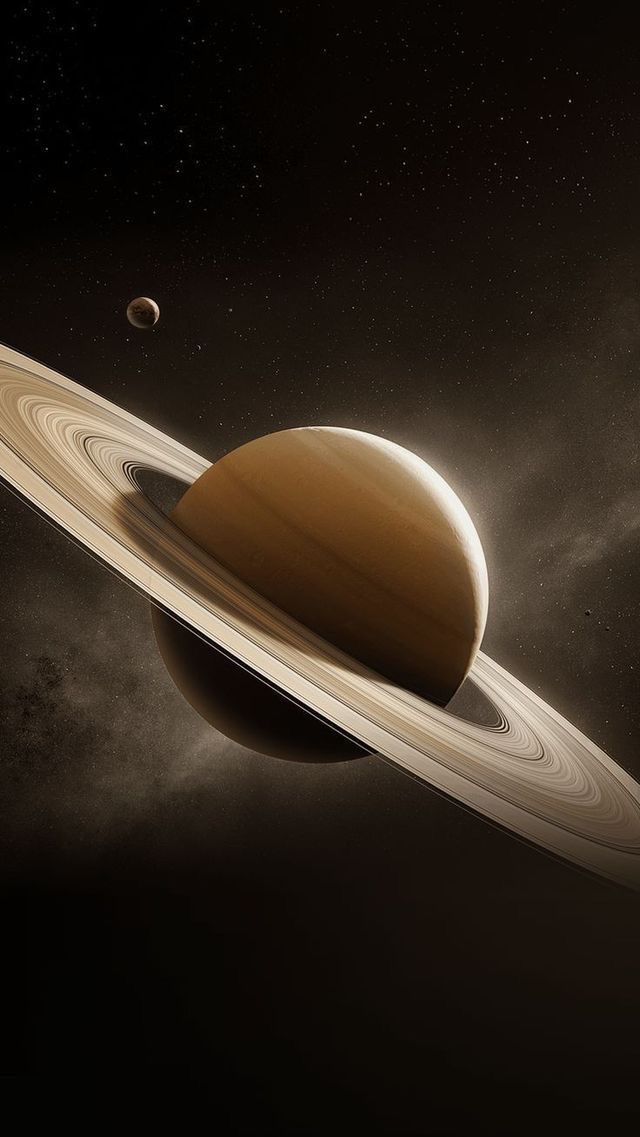
SATURN
.jpg)
Mars rotates on its axis every 24.6 Earth hours, defining the length of a Martian day, which is called a sol (short for “solar day”). Mars’s axis of rotation is tilted 25.2 degrees relative to the plane of the planet’s orbit around the sun, which helps give Mars seasons similar to those on Earth. Whichever hemisphere is tilted closer to the sun experiences spring and summer, while the hemisphere tilted away gets fall and winter. At two specific moments each year—called the equinoxes—both hemispheres receive equal illumination. But for several reasons, seasons on Mars are different from those on Earth. For one, Mars is on average about 50 percent farther from the sun than Earth is, with an average orbital distance of 142 million miles. This means that it takes Mars longer to complete a single orbit, stretching out its year and the lengths of its seasons. On Mars, a year lasts 669.6 sols, or 687 Earth days, and an individual season can last up to 194 sols, or just over 199 Earth days.